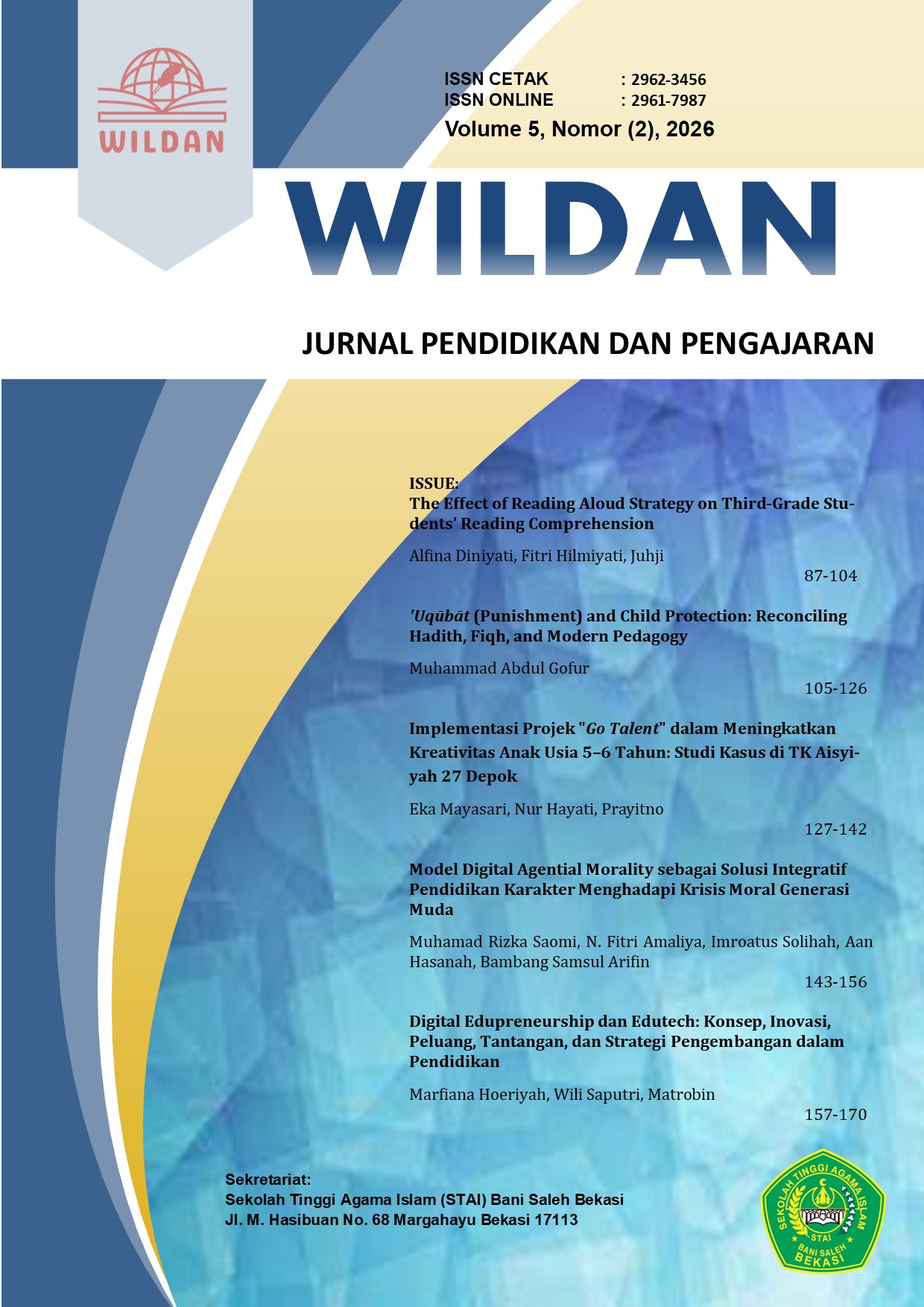
Digital Edupreneurship dan Edutech: Konsep, Inovasi, Peluang, Tantangan, dan Strategi Pengembangan dalam Pendidikan
DOI:
https://doi.org/10.54125/wildan.v5i2.124Keywords:
Digital Edupreneurship, Edutech, Educational Innovation, Digital Learning, Online EducationAbstract
This article discusses the concept of digital edupreneurship and the role of educational technology (edutech) in the modern education landscape. Digital edupreneurship refers to entrepreneurial activities in the education sector that utilize digital technology to create learning innovations, educational services, and educational products. The rapid development of technology has transformed conventional learning methods into more effective, flexible, and interactive digital-based learning. This study also examines the importance of innovation and creativity in developing digital learning media, methods, and content to enhance student engagement and understanding. Furthermore, this article explores various business opportunities in digital education, including online courses, digital tutoring, educational content creation, e-book sales, and online learning platforms. However, the implementation of digital edupreneurship faces several challenges, such as low digital literacy, limited technological facilities, lack of digital media skills, and increasing competition in the digital education market. Therefore, this article proposes strategic development approaches, including the utilization of social media, digital marketing, educational branding, creative content development, and improvement of digital learning service quality to ensure competitiveness and societal benefit.
References
Ahmadi, F. (2017). Guru SD di era digital: pendekatan, media, inovasi. CV. Pilar Nusantara.
Awa, A., Judijanto, L., Ohyver, D. A., Zahara, A. E., & Setiawati, T. (2024). Digital Marketing Strategy: Membangun Bisnis Online melalui Strategi Pemasaran Digital yang Efektif. PT. Green Pustaka Indonesia.
Aysi, S. A. H., Susilaningsih, S., & Sabandi, M. (2024). The Implementation of Digital Entrepreneurship Learning in Higher Education: A Systematic Literature Review. Pedagogia: Jurnal Pendidikan, 13(2), 191-232. https://doi.org/10.21070/pedagogia.v13i2.1692
Dewi, P. S. (2026). Pemanfaatan Media Sosial Tiktok @Palingkuliner Sebagai Media Promosi Kuliner Di Pekanbaru [Doctoral dissertation, Universitas Islam Negeri Sultan Syarif Kasim Riau].
Febrianti, K. R., Azizah, N., & Rusadi, F. (2025). Pemanfaatan kecerdasan buatan artificial intelligence (AI) dalam membantu kinerja pembelajaran. Jurnal Inovasi Pendidikan dan Teknologi Informasi (JIPTI), 6(1), 210-226. https://doi.org/10.52060/jipti.v6i1.288
Firdaus, K., & Ritonga, M. (2024). Peran teknologi dalam mengatasi krisis pendidikan di daerah terpencil. Jurnal Kepemimpinan Dan Pengurusan Sekolah, 9(1), 43-57.
Ginting, D., Sabudu, D., Barella, Y., Madkur, A., Woods, R., & Sari, M. K. (2024). Student-centered learning in the digital age: In-class adaptive instruction and best practices. International Journal of Evaluation and Research in Education (IJERE), 13(3), 2006-2019. https://doi.org/10.11591/ijere.v13i3.27497
Hasya, A., Wiweko, A., & Anggara, A. W. (2025). Exploring Digital twins in entrepreneurial strategy Di indonesia: A new frontier for startup experimentation. Int. J. Innovative Res. Eng. Manage, 2(1), 45-62.
Hasyim Mahmud Wantu, M. P. I., Djafar, F., & Hasan, J. R. (2025). Sistem Pendidikan Digital. PENERBIT NAGA PUSTAKA.
Hignasari, L. V. (2022). Pembelajaran coding dan peluang usaha kursus coding di era digital pasca pandemi covid-19. Jurnal Ilmiah Vastuwidya, 5(2), 82-89.
Husni, A. W. (2025). Strategi Kepala Madrasah Sebagai Edupreneur Dalam Membangun Branding Madrasah Unggul Di Era Disrupsi. Journal Creativity, 3(1), 325-338.
Inayati, I. N., Herlina, L., Muslih, I., Chodijah, S., & Harahap, S. D. (2025). Strategi pembelajaran di era digital.
Janattaka, N., & Adella, P. C. C. (2021). Peran platform digital dalam pembelajaran daring. Almufi Jurnal Pendidikan, 1(3), 138-146.
Judijanto, L., Santika, T., Nurjanah, N., Suwandi, W., Sulaeman, S., & Rais, R. D. A. (2025). Transformasi Pendidikan: Menghadapi Era Digital Di Ruang Belajar. PT. Sonpedia Publishing Indonesia.
Khotimah, H., & Rusli, R. (2025). Visual representational scaffolding model (VRSM) sebagai inovasi edupreneurship: Penguatan peran guru sebagai teacherpreneur dalam ekosistem pendidikan digital. Jurnal Edueco, 8(2), 474-483. https://doi.org/10.23887/jmt.v5i2.84323
Kurniawan, S. (2025). Literasi Digital Untuk Abad Ke-21. Pustaka Aksara.
Laila, D., Izzatul, R., & Miftah, M. (2025). Transformasi Digital di Dunia Pendidikan: Implementasi dan Dampak Teknologi Pembelajaran. Alpha, 1(2), 37-41. https://doi.org/10.70716/alpha.v1i2.172
Manurung, A. A. (2026). Integrating Moodle-Based Learning Innovation for Digital Pedagogy. Jurnal Pendidikan dan Pengajaran, 45-59. https://doi.org/10.1186/s41239-024-00450-2
Mohd Dzulkifli, D. Z., Rashid, U. K., Abu Seman, N. A., Yusuff, Y. Z., & Zainal, M. H. (2026). Higher Education Institutions and Digital Entrepreneurship in Developing Economies: A Systematic Review for Sustainable Industrial Transformation. PaperASIA, 42(2b), 220-238. https://doi.org/10.59953/paperasia.v42i2b.1061
Nuarida, E. B., & Yanuarsari, R. (2026). Pemberdayaan Kreator Media Sosial melalui Pelatihan Artificial Intelligence sebagai Upaya Penguatan Edupreneurship. JUKEMAS: Jurnal Pengabdian Kepada Masyarakat Lumbung Pare Cendekia, 3(1). https://doi.org/10.60126/jukemas.v3i1.1476
Permadi, D., Shabrina, F., & Rahyaputra, V. (2018). Menyongsong Kewirausahaan Digital Indonesia. UGM PRESS.
Perwita, D., Widuri, R., Afif, N. C., & Thoha, D. A. (2023). DIGITALPRENEUR POTENTIAL ANALYSIS OF EDUCATIONAL STUDENTS. Promosi: Jurnal Program Studi Pendidikan Ekonomi, 11(1), 9-22. https://doi.org/10.24127/pro.v11i1.7853
Pradana, M. A. W. (2025). Digital entrepreneurship education: a systematic review and contextual conceptual design. Jurnal Ilmu Komunikasi dan Pendidikan, 9(5). https://dx.doi.org/10.20961/jikap.v9i5.106738
Qurtubi, A., Ramli, A., Mahmudah, F. N., Suwarsito, S., & Nasril, N. (2024). Manajemen pendidikan Islam berbasis digitalpreneurship sebagai solusi dalam menghadapi tantangan era teknologi digital. Innovative: Journal Of Social Science Research, 4(2), 285-293. https://doi.org/10.31004/innovative.v4i2.9386
Setyani, N. S., Prianto, A., Wahyudi, A., Kom, A. Y. H., Syakilla, S. A., & Safa'ah, N. L. (2025). E-LEARNING INTERAKTIF 'MARKETING SWOT' BERBASIS GAME TEKNOLOGI. Pena Langit Publishing.
Sitaridis, I., & Kitsios, F. (2024). Digital entrepreneurship and entrepreneurship education: a review of the literature. International Journal of Entrepreneurial Behavior & Research, 30(2-3), 277-304. https://doi.org/10.1108/IJEBR-01-2023-0053
Syafruddin, S., Irriyanti, I., Syaharudin, S., Juwita, W., Mulawarman, W., & Akhmad, A. (2025). DESAIN STRATEGI BERBASIS INOVASI DIGITAL TRANSFORMASI MODEL BISNIS LEMBAGA BIMBINGAN BELAJAR DI ERA DISRUPSI. Jurnal Basataka (JBT), 8(2), 1966-1973. https://doi.org/10.36277/basataka.v8i2.1224
Theriana, A., Fitriati, S. W., Haryanti, R. P., Rustipa, K., & Ikhsan, R. S. (2026). Digital Edupreneurship and Teacher Agency Enhancing English Teaching Competencies in the Independent Curriculum. APTISI Transactions on Technopreneurship (ATT), 8(3). https://doi.org/10.34306/att.v8i3
Wahyudi, A., Deffinika, I., Mutia, T., Maulana, F. F., Maghfiroh, A., Prista, D., & Indraningrum Shrestha, M. E. (2025). Integration of Micro E-Learning Content in SIPEJAR Geoedupreneurship Course Based on Real Life Entrepreneurship. Jurnal Penelitian dan Pengembangan Pendidikan, 9(1), 56-66. https://doi.org/10.23887/jppp.v9i1.86241
Wibawanto, H., Siswandari, S., & Efendi, A. (2026). Digital Entrepreneurship Learning (DEL) as an Emerging Trend and Future Directions in Vocational Education: A Systematic Literature Review. ICTTE Proceedings.
Downloads
Published
How to Cite
Issue
Section
License
Copyright (c) 2026 Marfiana Hoeriyah, Wili Saputri, Matrobin Matrobin

This work is licensed under a Creative Commons Attribution-NonCommercial 4.0 International License.
This journal permits and encourages authors to post items submitted to the journal on personal websites or institutional repositories both prior to and after publication, while providing bibliographic details that credit, if applicable, its publication in this journal.